
Lesson
Foundations of Credit
Summary
Every time you swipe, tap, or sign is a promise to pay someone back later. This lesson introduces how borrowing works, why lenders charge interest, and what makes someone creditworthy.
Bellringer: The $200 Lending Decision
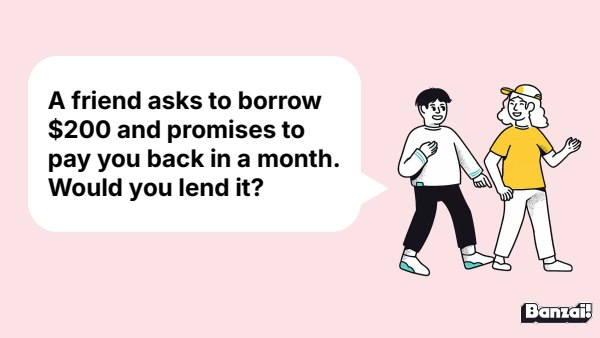
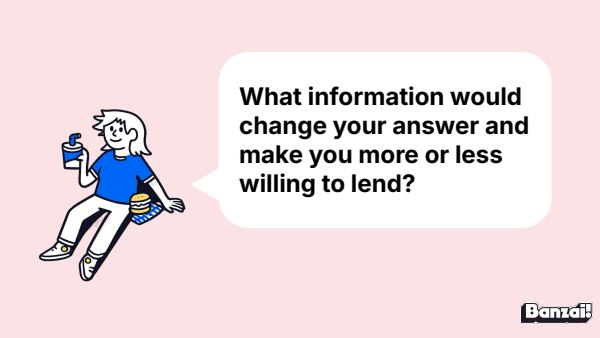
- A friend asks to borrow $200 and promises to pay you back in a month. Would you lend it?
- Cold call 2–3 students for their gut reaction, listening for themes of trust, track record, and income.
Instruction
- Define credit, interest, and creditworthiness.
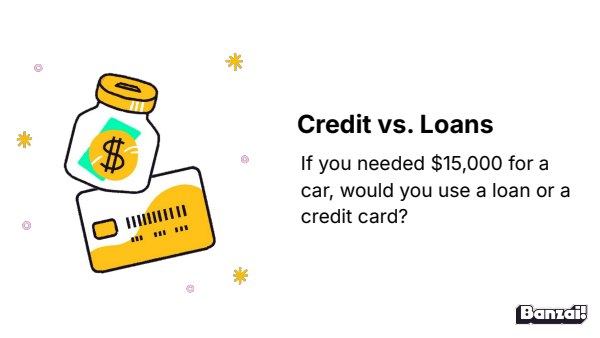
- Explain the difference between loans and credit cards, and between credit and debt.
- Discuss how interest rates vary by borrowing type and borrower risk.
Activity: Borrowing Basics Article
- Read the Borrowing Basics: How Loans Work article
- Find 3 examples of how interest or repayment works.
Discussion: Borrowing as a Contract
- Contrast variable spending with contractual obligations.
- Push students beyond surface answers — require them to explain why a $400 car payment carries more risk than $400 in discretionary spending.
Wrap-Up & Assessment
- Explain the difference between credit and debt.
- Name two factors that influence creditworthiness.
| Est. Time | Activity | Description |
|---|---|---|
| 5 min | Bellringer: The $200 Lending Decision |
|
| 10 min | Instruction |
|
| 12 min | Activity: Borrowing Basics Article |
|
| 8 min | Discussion: Borrowing as a Contract |
|
| 10 min | Wrap-Up & Assessment |
|
Lesson Prep

Borrowing Basics: How Loans Work
Debt often carries a negative reputation, but borrowing can be a practical and even strategic part of managing your finances.
Class Presentation
Includes a 19-slide deck with teacher notes. Present from Banzai, download a PDF, or copy it to Google Slides.
Presentations, Ready to Go
- Built-in PresentationPresent full screen, straight from Banzai
- Copy to Google SlidesMake an editable copy for your class
- Download or PrintSave as a PDF or print
- Teacher NotesSlide-by-slide guidance, printable as one handout
Unit 6: Credit & Debt

Foundations of Credit
Every time you swipe, tap, or sign is a promise to pay someone back later. This lesson introduces how borrowing works, why lenders charge interest, and what makes someone creditworthy.

Loan Mechanics
Every loan is just four variables fighting each other. This lesson breaks down how principal, interest rate, term, and down payment interact — and why amortization means you pay mostly interest first.
Loan Types
Not all loans are created equal—a mortgage and a payday loan share a name but live in different financial universes. This lesson explores secured vs. unsecured loans, common loan types, and loan structures.
How do Banzai lesson plans work? See the FAQ.