
Lesson
Identity Theft
Summary
A Social Security number isn't a secret. For most people, it's likely been shared dozens of times during everyday life. This lesson defines identity theft, exposes everyday red flags, and equips students with internet safety habits to protect their financial future.
Bellringer: Where Your Data Lives
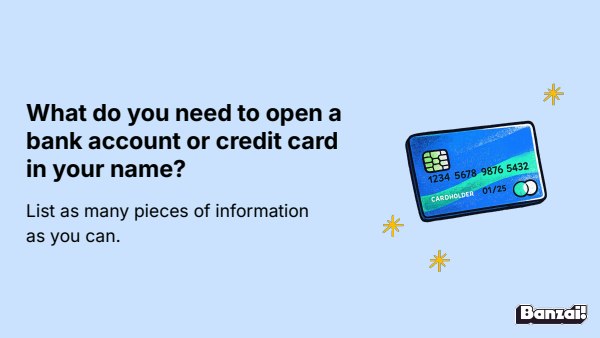
- Students silently list information needed to open a bank account or credit card.
- Build a running list on the board, then ask where each piece already exists online.
Instruction
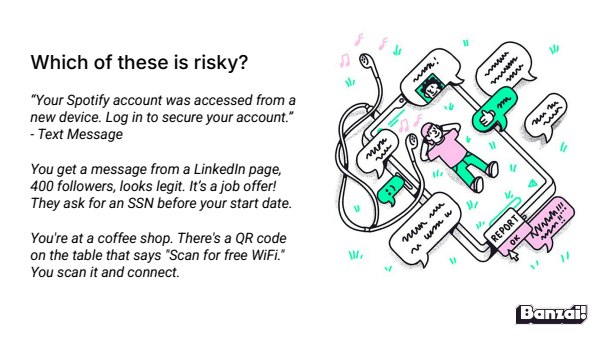
- Define identity theft and walk through risky scenarios (phishing text, fake job offer, QR code).
- Cover prevention, detection, and recovery steps using one concept per slide.
Discussion: Who's Responsible?
- Pose the question: who protects your identity—you, companies, or government?
- Spend 3–5 minutes letting students debate before revealing all three share responsibility.
Activity: Internet Safety Game
- Students complete the Internet Safety pretest, then start the simulation.
Wrap-Up & Assessment
- What do you do first if your email is compromised in a data breach?
- What's one way to prevent identity theft?
| Est. Time | Activity | Description |
|---|---|---|
| 5 min | Bellringer: Where Your Data Lives |
|
| 10 min | Instruction |
|
| 5 min | Discussion: Who's Responsible? |
|
| 20 min | Activity: Internet Safety Game |
|
| 2 min | Wrap-Up & Assessment |
|
Lesson Prep

Internet Safety Pretest
Assess student knowledge before beginning the Internet Safety course.

Internet Safety
Students navigate online safety scenarios involving privacy, phishing, and scams.
Class Presentation
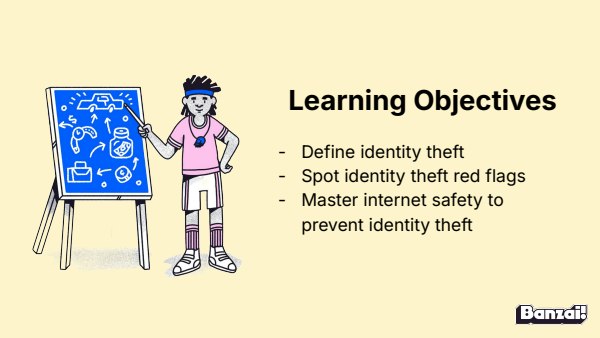
Includes a 16-slide deck with teacher notes. Present from Banzai, download a PDF, or copy it to Google Slides.
Presentations, Ready to Go
- Built-in PresentationPresent full screen, straight from Banzai
- Copy to Google SlidesMake an editable copy for your class
- Download or PrintSave as a PDF or print
- Teacher NotesSlide-by-slide guidance, printable as one handout
Unit 2: Consumer Fundamentals

Deceptive Practices & Consumer Contracts
Some businesses use questionable strategies to get customers and increase sales. Consumer contracts are notorious for pressuring users into a predatory contract with hidden features. Learn how to identify and protect against deceptive practices as a consumer.

Identity Theft
A Social Security number isn't a secret. For most people, it's likely been shared dozens of times during everyday life. This lesson defines identity theft, exposes everyday red flags, and equips students with internet safety habits to protect their financial future.
Scams & Fraud
The friendliest message in your inbox could also be the most dangerous one. This lesson trains students to spot the psychological tricks behind P2P scams, phishing, fake prizes, and impersonation before the money disappears.
How do Banzai lesson plans work? See the FAQ.