Lesson
The Time Value of Money
Summary
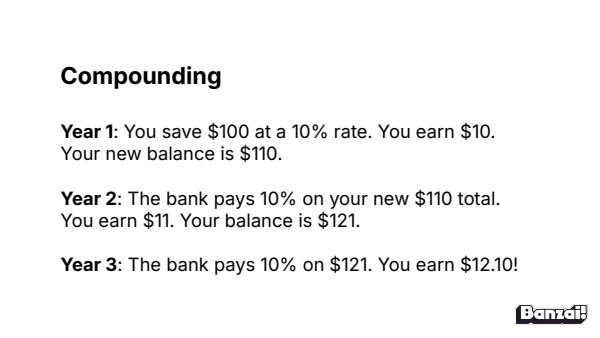
The time value of money isn't about how much you have; it's about how long you let it grow. This lesson explores compounding, inflation, and the Rule of 72 to show why starting early beats saving more.
Bellringer: The Magic Penny
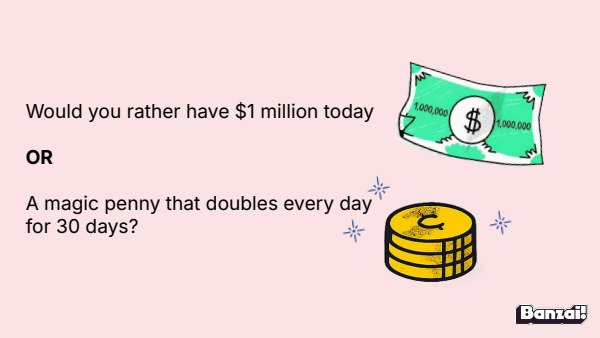
- Pose the $1 million vs. doubling penny choice.
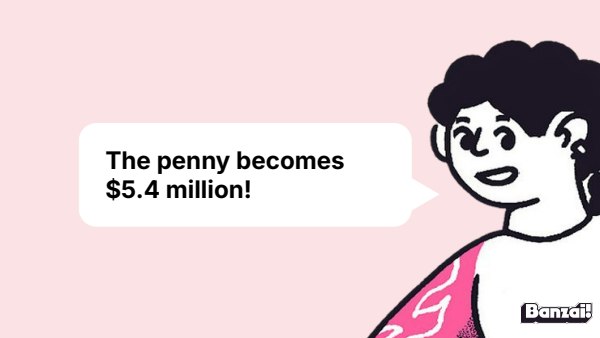
- Give students 1–2 minutes to write a gut response, then reveal the $5.4 million answer.
Instruction
- Walk through inflation, compounding, and the two-savers story.
- Teach the Rule of 72 with worked examples.
Discussion: What Stops You From Saving?
- Prompt students to name barriers that keep young people from starting to save.
- Have them picture their future selves at 25, 40, and 60.
Activity: Intro to Investing & The Power of Interest
- Students read the Intro to Investing article.
- Complete The Power of Interest worksheet on page 14 of the Middle School Personal Finance workbook.
Wrap-Up & Assessment
- In your own words, explain how compound interest acts like a money snowball.
- If an account has a 6% interest rate, how many years does it take to double?
| Est. Time | Activity | Description |
|---|---|---|
| 5 min | Bellringer: The Magic Penny |
|
| 10 min | Instruction |
|
| 10 min | Discussion: What Stops You From Saving? |
|
| 15 min | Activity: Intro to Investing & The Power of Interest |
|
| 5 min | Wrap-Up & Assessment |
|
Lesson Prep

Intro to Investing
Students learn stock market basics and how trading works.

Middle School Personal Finance Workbook
Complete page 14 of the workbook.
Class Presentation
Includes a 17-slide deck with teacher notes. Present from Banzai, download a PDF, or copy it to Google Slides.

Presentations, Ready to Go
- Built-in PresentationPresent full screen, straight from Banzai
- Copy to Google SlidesMake an editable copy for your class
- Download or PrintSave as a PDF or print
- Teacher NotesSlide-by-slide guidance, printable as one handout
Unit 7: Investing Money

The Time Value of Money
The time value of money isn't about how much you have; it's about how long you let it grow. This lesson explores compounding, inflation, and the Rule of 72 to show why starting early beats saving more.

Stocks, Bonds and Mutual Funds
Investing options fall into two general categories: lending money and owning companies. This lesson explores the core investment vehicles (stocks, bonds, mutual funds, and index funds) and the risk-reward tradeoff that ties them together.

Risk and Reward Tradeoffs
Chasing the biggest payout often means accepting the biggest chance of losing it all. This lesson explores risk tolerance, the risk-reward relationship, and why our brains make calm investing so hard.
How do Banzai lesson plans work? See the FAQ.