
Lesson
Building Emergency Funds
Summary
An emergency fund isn't a savings account for the next big purchase—it's self-insurance against life's surprises. This lesson teaches middle schoolers how to size a true emergency fund, distinguish needs from wants, and understand why liquidity is the secret ingredient.
Bellringer: Is This an Emergency?
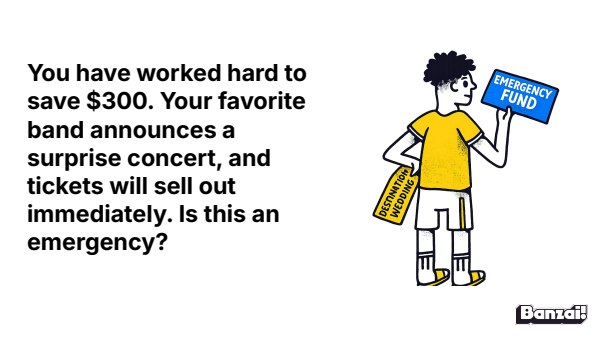
- Project the surprise concert scenario; give students 1–2 minutes to record a yes/no answer.
- Transition to the discussion slide to reveal the want-versus-need distinction.
Instruction
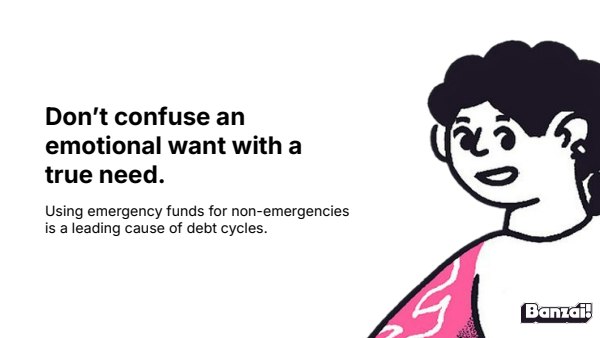
- Define a true emergency: unexpected AND necessary.
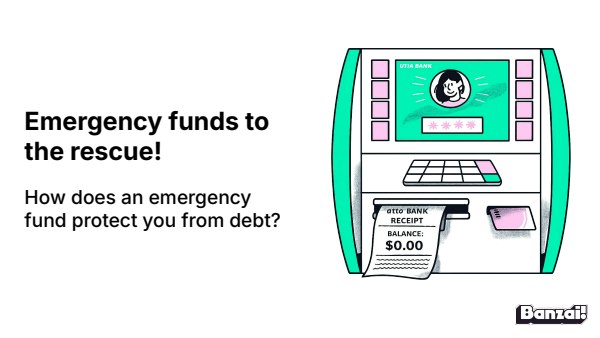
- Walk through how emergency funds stop the debt cycle and why liquidity matters.
Activity: 50/30/20 & Emergency Fund Worksheet
- Students read the 50/30/20 Rule article and find the savings allocation.
- Complete the Emergency Fund worksheet calculating a teen-sized fund.
Discussion: The Emergency Audit
- Rapid-fire Yes/No vote on four "break the glass" scenarios.
- Debate why it's so hard to leave savings untouched when a want feels urgent.
Wrap-Up & Assessment
- How is the size of an emergency fund calculated?
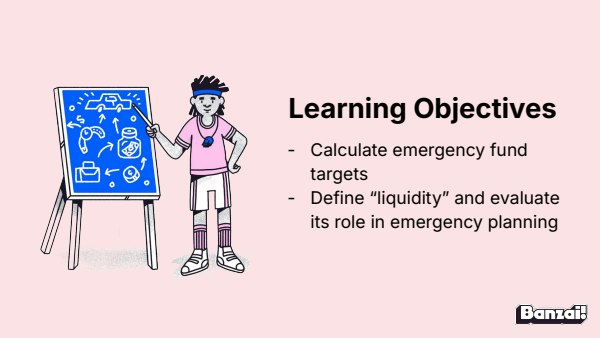
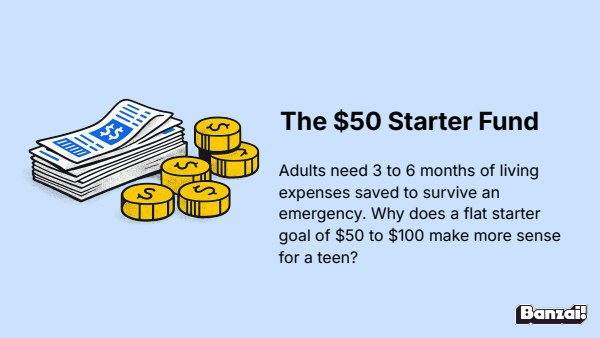
- What's a good emergency fund target for a middle-schooler?
| Est. Time | Activity | Description |
|---|---|---|
| 7 min | Bellringer: Is This an Emergency? |
|
| 10 min | Instruction |
|
| 13 min | Activity: 50/30/20 & Emergency Fund Worksheet |
|
| 8 min | Discussion: The Emergency Audit |
|
| 7 min | Wrap-Up & Assessment |
|
Lesson Prep

50/30/20 Budgeting
Students learn the 50/30/20 rule for dividing income.

Emergency Fund Worksheet
Students apply the 50/30/20 rule and the Savings Calculator to build an emergency fund goal, then decide what an emergency really is.
Class Presentation
Includes a 16-slide deck with teacher notes. Present from Banzai, download a PDF, or copy it to Google Slides.
Presentations, Ready to Go
- Built-in PresentationPresent full screen, straight from Banzai
- Copy to Google SlidesMake an editable copy for your class
- Download or PrintSave as a PDF or print
- Teacher NotesSlide-by-slide guidance, printable as one handout
Unit 4: Budget Basics

Tracking Money
Total cash flow isn't about how much you earn. Cash flow is about when the money moves. This lesson explores inflows, outflows, and the mid-month crash that leaves even smart earners broke.

Building Emergency Funds
An emergency fund isn't a savings account for the next big purchase—it's self-insurance against life's surprises. This lesson teaches middle schoolers how to size a true emergency fund, distinguish needs from wants, and understand why liquidity is the secret ingredient.

Budgeting Strategies
The best budget is the one you actually keep. This lesson compares four budgeting methods—50/30/20, zero-based, envelope, and reverse budgeting.
How do Banzai lesson plans work? See the FAQ.