
Lesson
When You're the Bully
Summary
Cyberbullying isn't always someone else's problem—a share, a like, or a forwarded meme can make any of us part of the harm. Explore how passive actions spread damage online and practice building a real repair plan when you mess up.
Bellringer: Does Sharing Make You a Bully?
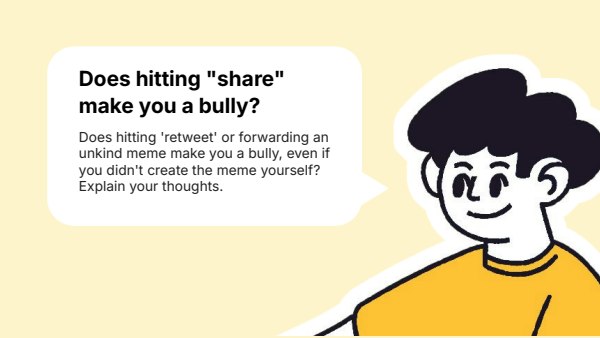
- Pose the question: does hitting "share" or "retweet" make you a bully, even if you didn't create the content?
- Have students write or turn-and-talk with a neighbor before inviting a few volunteers to share out.
Instruction
- Open by normalizing that everyone has contributed to online harm at some point — this lowers defensiveness.
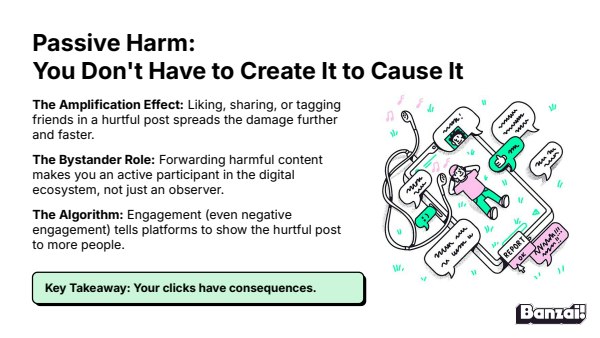
- Walk through passive harm (amplification, bystander role, algorithms) and the difference between empty excuses and genuine digital repair.
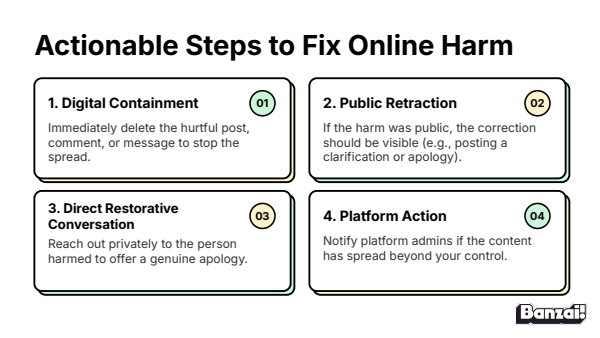
- Introduce the four-step action plan for fixing online harm: containment, retraction, direct conversation, and platform action.
Activity: Build a 3-Part Repair Plan
- Present the group chat rumor scenario and have students draft their own repair plan covering containment, accountability, and future behavior.
- Encourage students to imagine themselves as the person harmed by the rumor before writing their apology language.
Discussion: What Makes an Apology Genuine?
- Facilitate a class discussion on what separates a genuine apology from a performative one online.
- Push deeper with follow-ups about tone, body language, and navigating hurt feelings even when intent wasn't malicious.
Wrap-Up & Assessment
- Why can a "like" contribute to cyberbullying?
- List at least 2 things you should do if you cause harm online.
| Est. Time | Activity | Description |
|---|---|---|
| 5 min | Bellringer: Does Sharing Make You a Bully? |
|
| 10 min | Instruction |
|
| 8 min | Activity: Build a 3-Part Repair Plan |
|
| 10 min | Discussion: What Makes an Apology Genuine? |
|
| 12 min | Wrap-Up & Assessment |
|
Lesson Prep

Cyberbullying Posttest
Assess student learning after completing the Cyberbullying unit.

Cyberbullying Vocab
Review the vocab terms from Cyberbullying.
Class Presentation
Includes a 17-slide deck with teacher notes. Present from Banzai, download a PDF, or copy it to Google Slides.
Presentations, Ready to Go
- Built-in PresentationPresent full screen, straight from Banzai
- Copy to Google SlidesMake an editable copy for your class
- Download or PrintSave as a PDF or print
- Teacher NotesSlide-by-slide guidance, printable as one handout
Unit 4: Online Conflict

Impersonation, Doxxing, and Leaking
A whispered secret in a crowded hallway is nothing like the same secret posted online. Explore how impersonation, catfishing, doxxing, and leaking weaponize personal information—and build a plan to protect your own.

When You're the Target
Clapping back at a cyberbully feels like justice, but it usually backfires and prolongs the conflict. Students master the D.B.R.T. protocol—Document, Block, Report, Tell—and practice deciding who to loop in, from parents to police, across a set of real-world scenarios.
When You're the Bully
Cyberbullying isn't always someone else's problem—a share, a like, or a forwarded meme can make any of us part of the harm. Explore how passive actions spread damage online and practice building a real repair plan when you mess up.
How do Banzai lesson plans work? See the FAQ.